






- admin
- September 11, 2024
- No Comments
Global coffee production is a complex and interconnected system that reflects climate, agricultural heritage, innovation, and global demand. Understanding which countries dominate this landscape is not simply a matter of volume, it is a strategic advantage for brands, distributors, and industry leaders seeking reliable sourcing, quality consistency, and long-term partnerships.
At The Coffee Partner, we analyze these dynamics to give professionals a clear picture of where opportunities lie for collaboration, investment, and future affiliate integration.
Brazil: Unmatched Volume and Market Influence
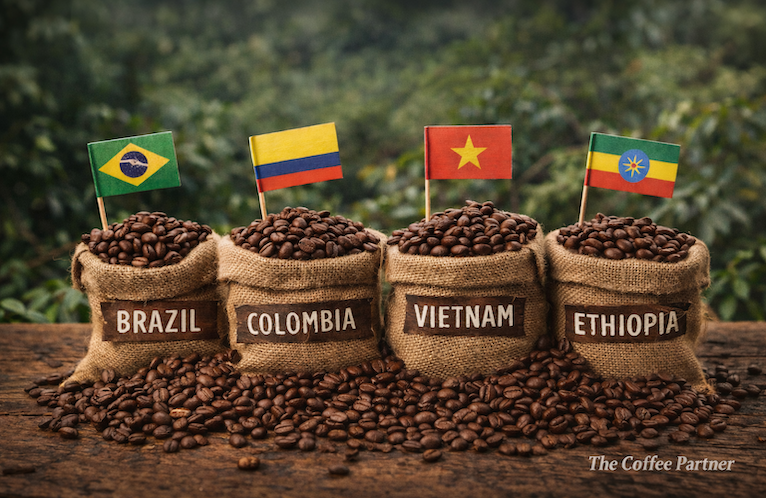
Brazil has led the world in coffee production for more than 150 years. Its sprawling plantations, advanced harvesting mechanisms, and diverse microclimates allow the country to produce a wide range of beans from commercial-grade robusta to high-quality arabica.
Its dominance goes beyond quantity: Brazil plays a major role in stabilizing global prices and setting supply expectations for both commodity and specialty sectors.
Why it matters for brands:
- Highly scalable sourcing options
- Established supply chain infrastructure
- Consistent quality for blends and espresso roasts
For companies exploring affiliate partnerships with large-scale suppliers, Brazil remains the most reliable entry point.
Vietnam: The Robusta Powerhouse
Vietnam transformed itself into the world’s second-largest producer through aggressive development of robusta coffee. Its contribution is crucial for instant coffee, soluble products, and commercial blends that require a strong body and lower acidity.
Industry advantages:
- Competitive pricing
- High yields and stable supply
- Increasing adoption of sustainability practices
Vietnam’s role is especially important for brands targeting mass-market consumers or developing private-label offerings.
Colombia: The Standard of Premium Arabica
Colombia’s reputation is built on quality, not quantity. Its steep Andean slopes, microclimates, and hand-picked harvesting result in smooth, aromatic arabica beans revered worldwide.
Why Colombia leads in specialty sourcing:
- Strong institutional support from the Federación Nacional de Cafeteros
- Protected origin reputation
- Established networks for traceability
For roasters seeking premium partnerships, Colombia remains a gold standard.
Indonesia: Distinctive Origins and Processing Traditions
Indonesia’s islands Sumatra, Java, Bali, Sulawesi produce some of the most recognizable flavor profiles in the world. The traditional wet-hulling process imparts earthy, spicy, and full-bodied notes that define many specialty blends.
Opportunities for brands:
- Unique flavor diversification
- Growing specialty market
- Story-driven sourcing potential
Indonesia is ideal for brands looking to differentiate their lineup through origin storytelling.
Ethiopia: Heritage, Biodiversity, and Complexity
Ethiopia, considered the birthplace of coffee, offers unparalleled natural variety. Many beans grow wild, creating complex and aromatic profiles floral, citrusy, fruity which make Ethiopian coffee highly sought after by specialty roasters.
Industry value:
- Exceptional flavor complexity
- Traditional processing methods
- Strong appeal for third-wave consumers
Ethiopia provides unmatched depth for high-end offerings and subscription programs.
Honduras: The Fast-Growing Central American Leader
Once overshadowed by its neighbors, Honduras has risen significantly in the global rankings thanks to investment in farmer training, drying infrastructure, and cooperative models.
Why Honduras is rising:
- Increasing specialty recognition
- Improved post-harvest processing
- Strong export growth
Honduras is an emerging opportunity for brands wanting competitive pricing with specialty potential.
Global Trends Shaping Coffee Production
Climate Adaptation: Producers are investing in resistant varieties, shade-grown systems, and high-altitude expansion.
Traceability and Certifications: Market demand for transparency is creating new technological solutions for farm-to-cup visibility.
Direct Relationships: Brands increasingly seek direct partnerships with farmers to secure quality and storytelling value.
Digitalization of Supply Chains: From satellite monitoring to digital auctions, technology is reshaping sourcing.
Strategic Opportunities for Industry Collaboration
For companies in roasting, distribution, online retail, or equipment manufacturing, understanding the leading producing countries enables:
- Affiliate partnerships with global brands
- Co-branded sourcing programs
- Origin-specific product launches
- B2B collaborations
- Subscription-based offerings
At The Coffee Partner, our mission is to support that growth by connecting industry leaders with the origins, insights, and opportunities that matter most.
- Tags:
- Coffee Beans

admin
Twenty years from now you will be more disappointed by the things that you didn’t do than by the ones you did do. Sail away from the safe harbor.
 Get it on
  Download on the