In the global coffee conversation, few topics generate as much confusion as the difference between espresso beans and coffee beans. Café menus, supermarket shelves, and even specialty roasters often reinforce the idea that espresso requires a completely different type of bean. The truth, however, is more nuanced and understanding it reveals much about how coffee is roasted, brewed, and experienced.
At its core, espresso is not defined by the bean itself, but by the method used to extract it.
Espresso Beans vs Coffee Beans: A Common Misconception
Coffee beans used for espresso and those used for brewed coffee usually come from the same plant species most often Arabica, sometimes Robusta, or a blend of both. There is no botanical category called “espresso beans.”
What differentiates them is intent. Beans labeled as espresso are roasted and blended to perform well under pressure, while beans marketed for filter coffee are often designed to highlight clarity and acidity through slower extraction methods.
The Importance of Roast Profile
Roast level plays a major role in the espresso-versus-coffee discussion. Espresso roasts tend to fall in the medium to dark range. This isn’t about bitterness alone, it’s about solubility. Darker roasts break down the bean’s structure, allowing water to extract flavors efficiently in the short brewing time espresso requires.
In contrast, lighter roasts are commonly favored for pour-over or drip brewing, where longer contact time allows delicate acids and aromatic compounds to shine.
For roasters and brands, roast profile becomes a storytelling tool one that connects bean origin, brewing method, and consumer expectation.
Grind Size and Brewing Method
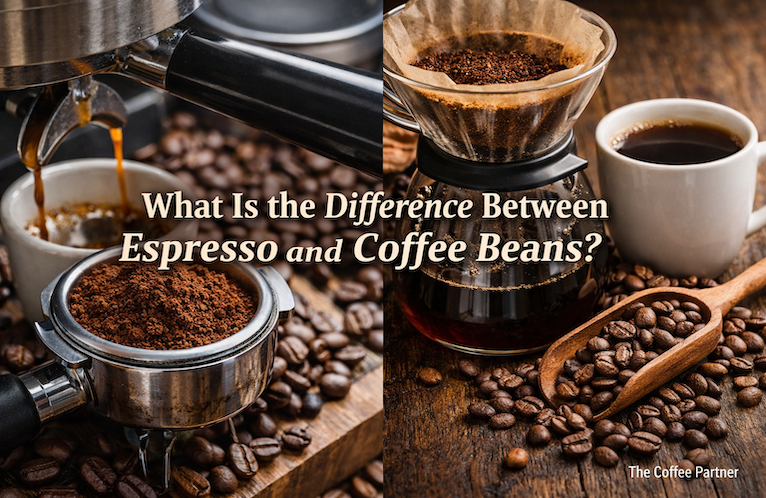
Perhaps the most significant difference lies not in the bean, but in how it’s prepared. Espresso uses a very fine grind and is brewed using approximately nine bars of pressure, forcing hot water through compacted coffee in about 25–30 seconds.
Brewed coffee methods such as drip, French press, or pour-over rely on gravity and coarser grinds. This slower extraction emphasizes different aspects of the coffee’s flavor, often resulting in a lighter body and more pronounced acidity.
In other words, espresso concentrates flavor; brewed coffee reveals it gradually.
Flavor and Sensory Experience
Espresso is known for its intensity: a full body, rich mouthfeel, and concentrated flavors. Notes of chocolate, caramel, and nuts are often emphasized, especially in darker roasts.
Brewed coffee, on the other hand, tends to showcase complexity. Floral, citrus, and fruit-forward notes are more common, particularly with light to medium roasts.
Neither is superior; they simply serve different sensory experiences.
The Caffeine Question
One of the most persistent myths is that espresso contains more caffeine than coffee. Per ounce, this is true. However, a standard serving of brewed coffee contains significantly more caffeine than a single shot of espresso due to volume.
Understanding this distinction is essential for consumers and for brands educating their audience with accuracy.
Choosing the Right Beans
Selecting between espresso and coffee beans depends entirely on how you brew. Espresso machines benefit from beans roasted specifically for pressure extraction, while manual brewing methods offer flexibility across roast levels.
Many specialty roasters now create versatile beans designed to perform well across multiple brewing styles, reflecting a market that values adaptability and education.
For the coffee industry, clarity builds trust and trust builds loyalty ☕🔗☕









 Get it on
  Download on the